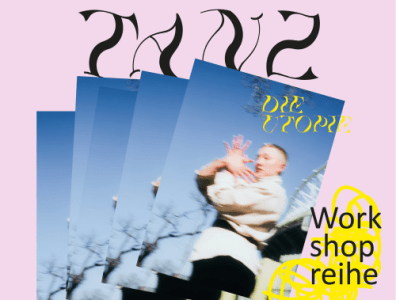

How to move politically? Do we move? Towards who or what? Drawing on Hannah Arendt’s reflection that “politics arises in what lies between men and is established as relationships” (Arendt & Kohn, 2007, p. 95), Choreopolitics of Joy approaches the political not as something already given within the individual, but as something that comes into being through the encounter with the other and through collective action. Politics are never singular, never static. Dance and performance make these dynamics tangible. They show how bodies can gather, resist, and create new forms of relation. Choreographer and theorist André Lepecki offers a framework for understanding this through the concept of choreopolitics, moments in which regulated, disciplined movements (choreopolicing) are disrupted. These disruptions are not only refusals of control but openings for alternative ways of being and moving together. Seen through this lens, dance becomes more than artistic expression; it is a space to rehearse freedom and to imagine other futures, however temporary or fragile. In this exhibition, joy is approached as an essential part of these processes. Joy is not treated as a retreat from political struggle, but as a collective energy that sustains it. In shared dances, in rhythm, in the act of moving together, can open possibilities to move away from oppressive normativity and ultra structure modes of living and being in and with the body (personal and social). Choreopolitics of Joy reflects on the basic and important question: What does it mean to move politically? Towards where/what are we orienting our bodies? Which structures can we still move? And, what moves us still? This reflection unfolds through art, performances, lectures and workshops. Artists: André Lepecki, Antonio Monroy, Iris Omari Ansong, MITABA-Trio, Neo Matloga, Rabbya Naseer, Rawan Almukhtar, Tania Libertad Ávila, Tonny Africa, William Matlala, Yi-um Collective Curator: Frida Robles Ponce rotten bark an