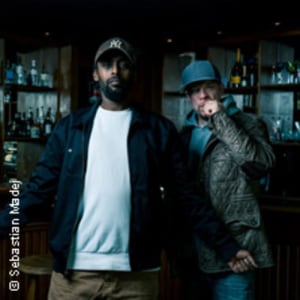

Nation of Language Synthpop, minimal wave, post-punk, goth, new romantic — fans and critics alike have dug deeply into their vintage thesauruses to describe the beguiling work of Nation of Language. And if you can’t precisely define the band, that’s the point. Frontman Ian Richard Devaney has become prodigious in expanding what synthesizer-driven music can evoke, such that his output is as much an extrasensory journey as it is an all-too-human destination. With that experience in mind, he wrote the band’s fourth album — the spectral, spacious Dance Called Memory — in the most humble of ways: chipping away at melancholia by sitting around and strumming his guitar. “It’s a great way to distract yourself,” he says, “when you are depressed.” Nation of Language’s first two albums, Introduction, Presence (2020), and A Way Forward (2021), came as pandemic godsends: gorgeous, relatable soundtracks to our collective doldrums. But it was their last LP, Strange Disciple (2023), that catapulted the group from cultural standouts to critical darlings, with the album being named Rough Trade’s Album of the Year. With that release, Pitchfork wrote that the band “are learning what it means to get bigger and better.” This is Devaney’s calling: soulfully translating individual despair into a comforting, collective mourning. This uncannily pervades the album. The single “Now That You’re Gone,” which radiates and reverberates with a devastating wistfulness, was inspired by witnessing his godfather’s tragic death from ALS, and his parents’ role as caretakers for this ailing friend. “To be a caretaker — transforming your home into a kind of hospital wing and structuring your life around the dire needs of another — is such a difficult, powerful act of love and friendship,” Devaney says. “It’s made more difficult by our economic system that doesn’t seem to value this in any way commensurate with how hard it is.” At its heart, the song
About these tags
Short explanations of what to expect at this event.
A live music performance by one or more artists or bands in front of an audience. The format and atmosphere vary widely depending on the genre and venue.
An event centred on dance — either as a performance to watch or as a social event to participate in yourself, depending on the format.
A diverse movement that emerged after punk's initial wave, incorporating art music, electronic sounds, and world music influences into a darker, more angular, and more experimental sound.
An electronic pop genre built around synthesisers as the primary instrument, emerging in the late 1970s and 1980s and continuing to inspire artists today with its clean, melodic sound.
Electronic music stripped back to its essentials — sparse, repetitive, and hypnotic, using very few sonic elements to create a focused and trance-inducing effect.